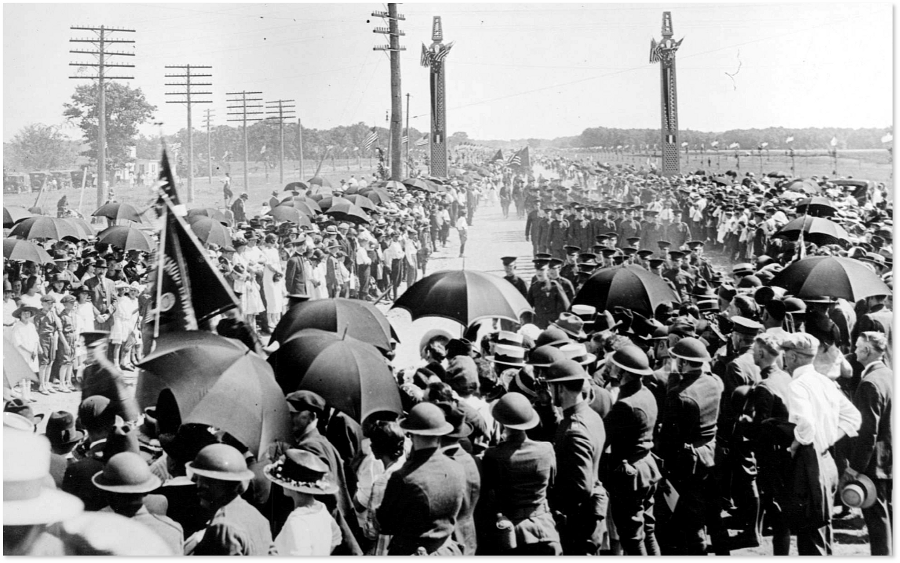
Conceived in the aftermath of World War I, Victory Memorial Drive emerged from Superintendent Theodore Wirth’s vision for a living monument. Designed as the northwest segment of the Grand Rounds parkway system, the corridor was engineered around parallel rows of 568 Moline elms, each paired with a bronze marker honoring a individual fallen serviceman or nurse from Hennepin County. Charles M. Loring provided critical financial backing by donating the saplings and establishing a $50,000 maintenance trust. Dedicated on June 11, 1921, before a crowd of 30,000, the event featured low-flying biplanes dropping flowers, cannon salutes, and military honor guards paired with local schoolchildren. The grand tribute garnered international acclaim, drawing post-war supervisory visits from Allied commanders Marshal Ferdinand Foch and General John J. Pershing.
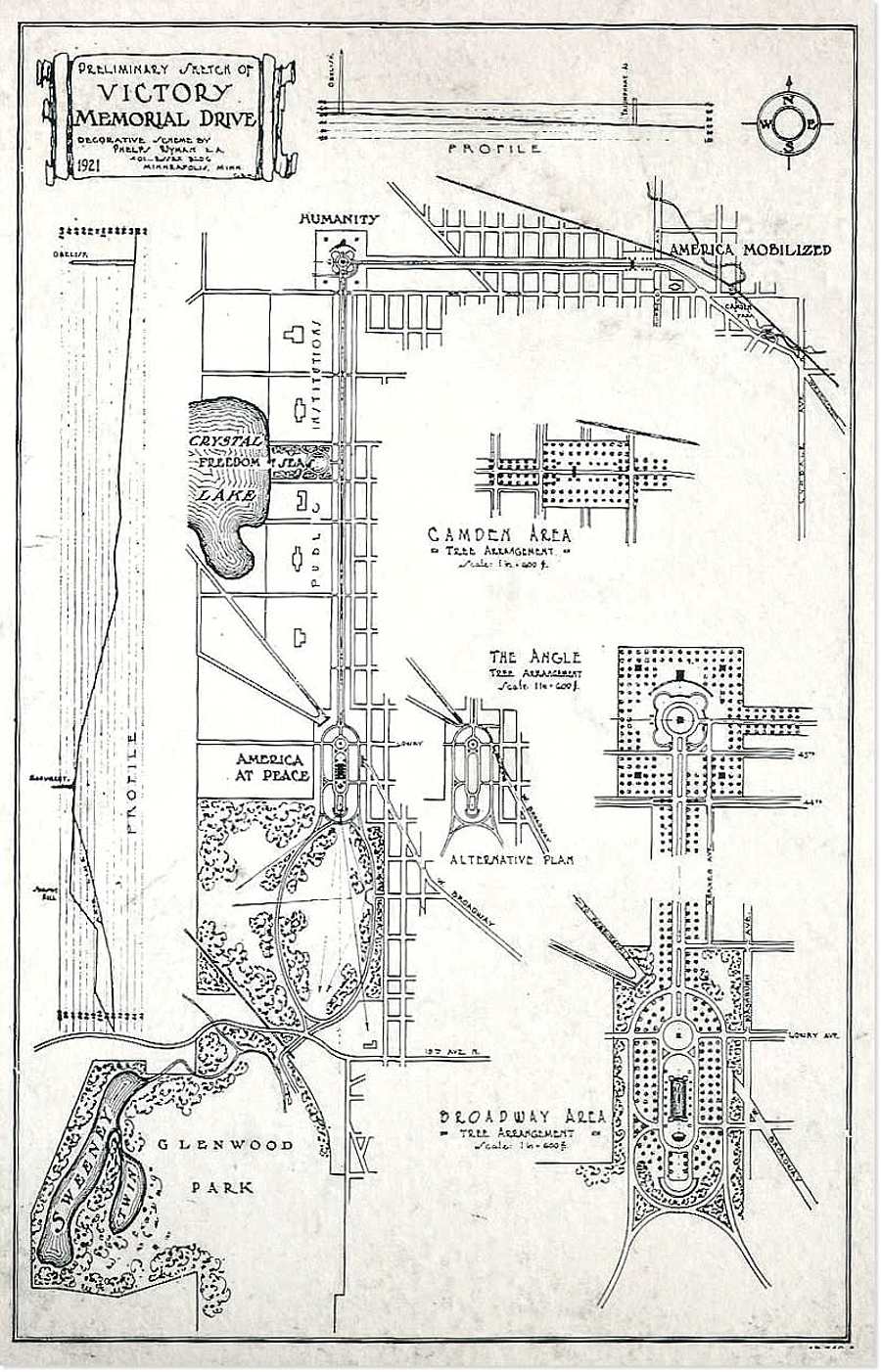
Geometrically, the parkway runs north along Xerxes Avenue before making a 90-degree turn east at 45th Avenue North. This apex hosts the primary commemorative plaza, anchored by a 1923 bronze flagpole funded by local schoolchildren, as well as a 1930 bronze replica of Augustus Saint-Gaudens Abraham Lincoln statue erected by Civil War veterans. The corridor became central to regional growth, prompting real estate booms in Robbinsdale subdivisions like Victory View (1921) and Snyder’s Addition (1940). However, this expansion was tied to discriminatory practices, as developers embedded legally binding racial covenants into property deeds to exclude non-white residents. Concurrently, the border area hummed with cultural and civic activity—ranging from the headquarters of Wilford “Captain Billy” Fawcett’s Whiz Bang magazine to the 1940 founding of Victory Hospital (later North Memorial Health) near the busy seven-spoke “Victory Circle” roundabout.
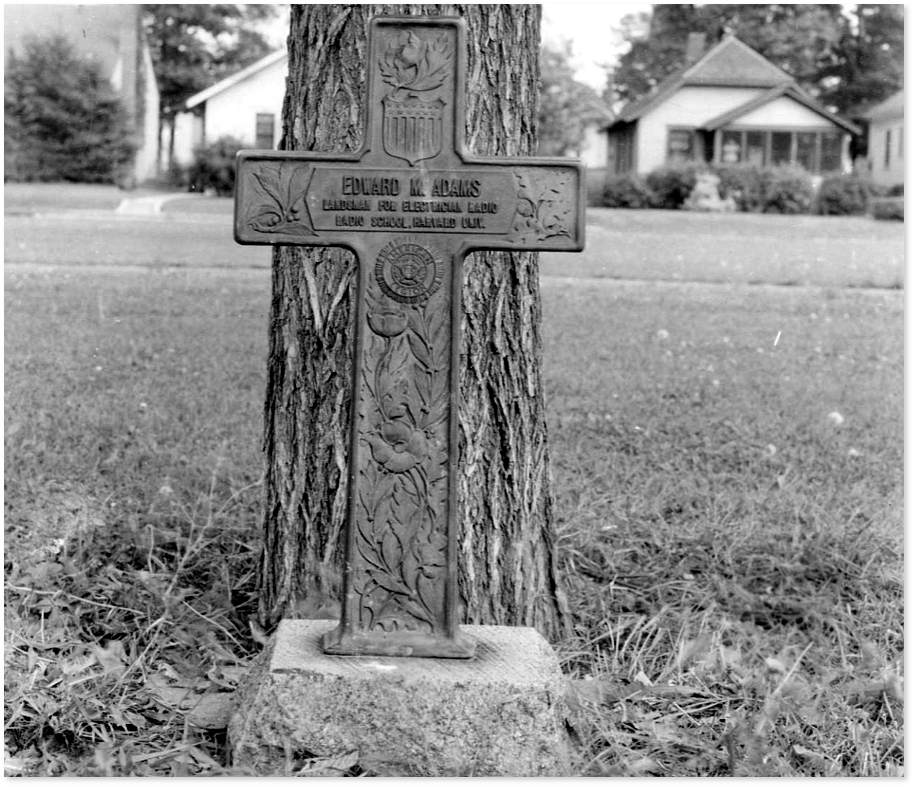
Over the decades, the living memorial faced severe physical and environmental threats. In 1953, upright granite tree markers were replaced with flush bronze plaques to accommodate lawn maintenance and prevent root heaving. Beginning in the 1970s, Dutch Elm Disease devastated the parkway’s monoculture, forcing the removal of hundreds of original elms and compromising the regimental uniformity of the canopy. Advocacy groups ultimately secured local and state historic district designations for the Drive in 2003, unlocking multi-million-dollar funding for comprehensive restoration. Between 2010 and 2021, non-historic trees were systematically replaced with disease-resistant elm cultivars, historical lighting was restored, and a green granite monument wall was built—featuring a central plaza engineered to align precisely with the sun’s rays at 11:00 AM every November 11th.
Listen to the rest of the story!
Image at the top of the post: Victory Memorial Drive Dedication, 1921 (Courtesy of Hennepin County Library)
In the early 1960s we played a lot of football in the middle of the Parkway. The big trees made good boundaries.