Tracing its roots back to 1906 when village leaders and community members—including W.F. Grenell and George O. Smith—first proposed forming a band to promote local growth, the organization evolved through several early iterations and names, including the Robbinsdale Civic Band, the Robbinsdale Military Band, and the Robbinsdale Concert Band. Guided initially by longtime directors such as William Grenell and William F. Grenell through the 1920s, the ensemble established a strong civic presence, performing open-air concerts and community events. As the decades progressed, leadership transitioned through figures like Louis Spotten in the early 1930s and Miles Sery from 1934 to 1936, paving the way for Clarence I. Hegg in 1937 and laying the groundwork for the band’s legendary mid-century era of competition victories and
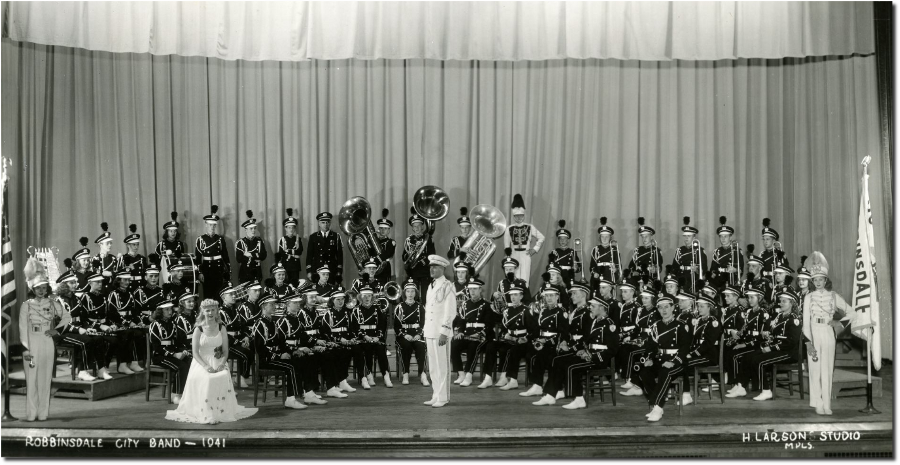
Under director Paul W. Larson starting in 1938, the band became a competitive powerhouse, winning seven consecutive Minnesota State Fair championships and earning a perfect 100% score at the 1941 Aquatennial. World War II temporarily disrupted the group as members served overseas, resulting in four fallen members honored on the band’s colors, but returning veterans sparked a postwar golden age. Director Robert “Bob” Mendenhall led the band through a 17-year tenure, achieving national recognition when his 1957 score The Story of the United Nations was entered into the Congressional Record. This era also produced memorable local lore, including band members hiding contraband beer in a tuba bell during a performance and playing through a nearby fire to prevent crowd panic.
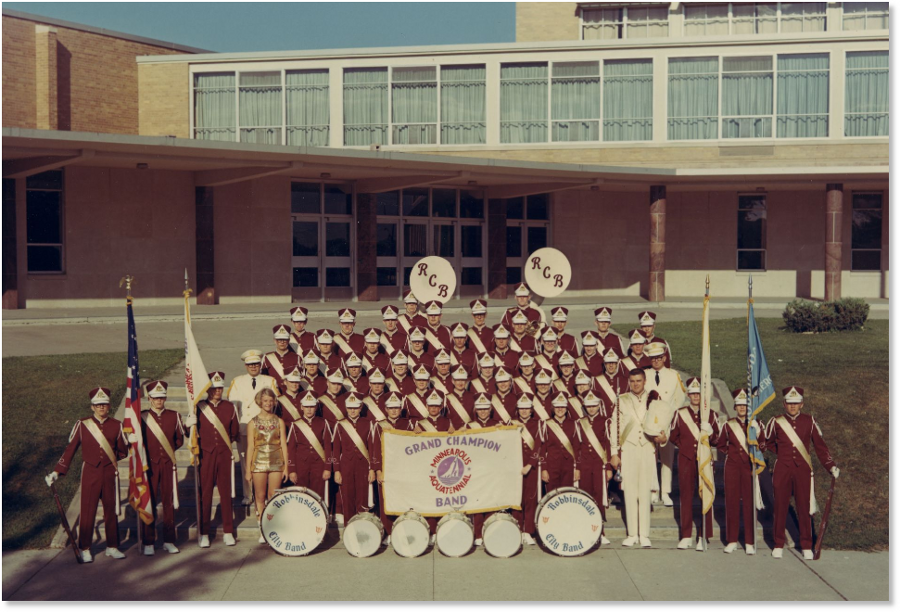
As cultural shifts during the 1960s reduced interest in traditional marching units, director Roger Thompson revitalized the organization in 1969 by splitting it into distinct adult concert and marching bands. This adaptation provided a lasting creative outlet for local residents of all professions. The band celebrated its 100-year centennial in 2006 with an alumni reunion featuring past directors and a custom composition titled Whiz Bang. Today, under director Chad Green, the Robbinsdale City Band continues to operate as a vibrant concert and jazz ensemble that preserves the town’s rich musical tradition.
Listen to the Rest of the Story
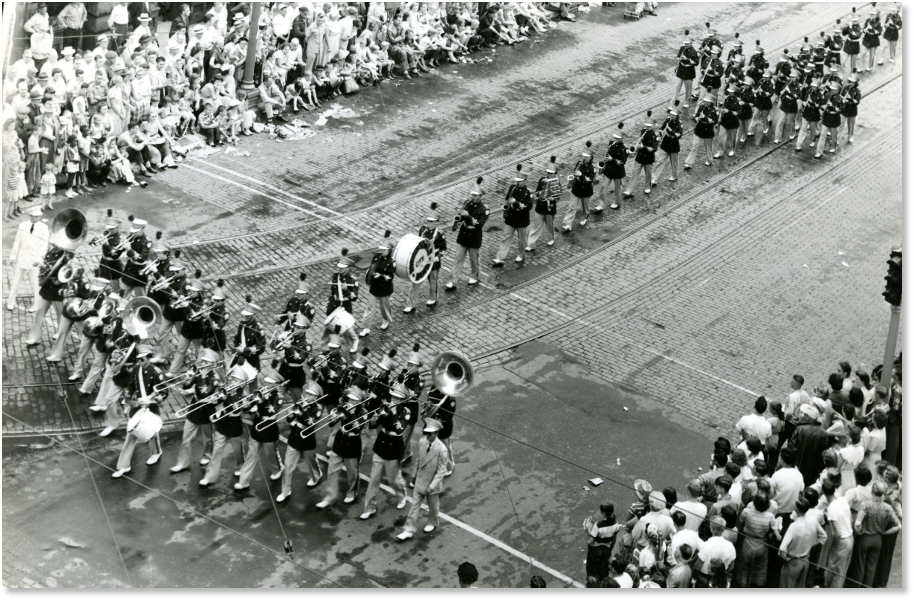
The image at the top of the post features Robbinsdale City Band marching in anchor formation in a Minneapolis Aquatennial Parade in 1950. Director Bob Mendenhall is wearing a white suit in the upper left.
Wow, thanks so much for this historical recap! I’m descended from the founding Grenell family, and I always appreciate any mention I can find of them. (Small correction here–at 2:36, you mention William E. Grenell and his wife Lillie, but his name was William H(enry) Grenell.)
As I was researching the Grenell history, I was lucky to come across newspaper clippings of William’s early group before they landed in Robbinsdale. Young William had quite a popular minstrel group in and around Brookings, South Dakota in the early 1890s. Robbinsdale’s gain was their loss!